

Gravity Filling Machine: Cost-Effective High-Speed Filler for Low-Viscosity Clean Liquid Production
2026-08-21 08:28:16
admin
7
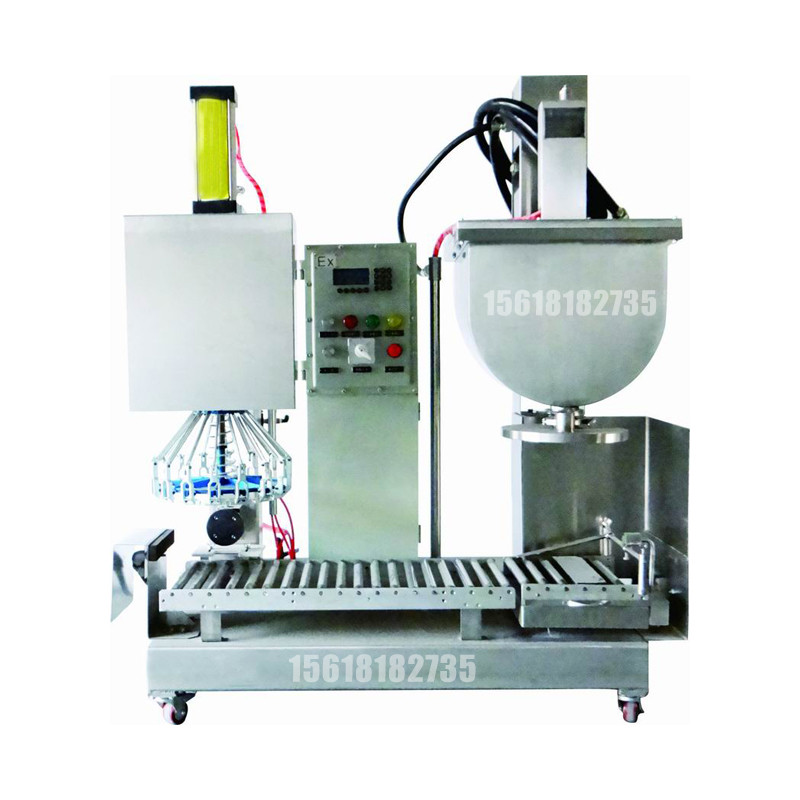
Many industrial liquid filling lines face unnecessary cost waste and over-engineered equipment issues. High-precision pump fillers, vacuum systems, and pressure filling machines deliver excessive performance for simple, clean, low-viscosity liquids, bringing higher procurement costs, complex maintenance, and increased energy consumption. Small and medium-sized manufacturers producing water, beverages, and mild chemical solutions often need stable, fast, and low-cost filling equipment rather than overqualified industrial systems. This Google E-E-A-T compliant SEO article focuses exclusively on gravity filling machines, a reliable gravity-driven filling technology never covered in our previous equipment guides. Leveraging natural gravitational flow and intelligent valve control, it provides a straightforward, efficient, and budget-friendly filling solution for clean, particle-free low-viscosity liquid products.
Gravity filling stands out as one of the oldest yet most practical automated filling technologies in the packaging industry. Unlike mechanical displacement or pressure-dependent fillers that rely on electric pumps or compressed air, gravity filling utilizes natural fluid gravity to complete liquid feeding, eliminating complex mechanical extrusion and pressure conversion structures. This simplified design greatly reduces equipment failure points, daily maintenance workload, and long-term operational costs. Optimized with modern PLC timing control and anti-drip nozzles, traditional gravity filling technology has been upgraded to meet modern commercial production standards, becoming the preferred equipment for mass production of pure, low-viscosity liquids with stable fluidity and no solid impurities.
Working Principle of Gravity Filling Machines
Gravity filling machines adopt pure gravity-flow timed filling technology, with a minimalist working mechanism completely different from pump-type, piston, and negative-pressure filling systems. Core components include elevated liquid storage tanks, self-weight flow nozzles, electromagnetic timing valves, anti-drip sealing modules, photoelectric bottle sensors, and PLC intelligent control panels. The entire filling process requires no mechanical pressurization or fluid pumping.
During operation, clean liquid materials are stored in the elevated constant-level tank to maintain stable gravitational pressure. Photoelectric sensors detect qualified empty bottles in place and trigger the opening of filling nozzles. Liquid flows down naturally relying on gravity at a constant stable speed. The PLC system precisely controls the opening duration of each nozzle to adjust filling volume accurately. Once the preset time is reached, all nozzles close instantly with anti-drip locking functions to avoid residual liquid dripping and bottle mouth contamination. The whole cyclic process runs continuously, ensuring uniform filling volume, stable speed, and clean operation for each batch of products.
Core Advantages Over Complex Filling Equipment
Modern gravity filling technology delivers unique practical advantages for standard low-viscosity liquid production:
Ultra-Low Operational Costs. No pump operation or pressure conversion reduces power consumption significantly. The simplified mechanical structure minimizes wearable parts, cutting daily maintenance and replacement expenses.
Zero Product Damage & Pollution. Pure natural gravity flow avoids shear force, extrusion, and metal friction, ensuring zero impurity mixing and original liquid ingredient integrity.
High Continuous Production Stability. Fewer mechanical components mean lower failure rates, supporting long-term uninterrupted high-speed operation and reducing production downtime.
Simple Operation & Debugging. Intuitive timing and level adjustment system requires no professional technical training, enabling fast parameter switching for different filling volumes.
Excellent Hygienic Performance. Smooth unobstructed flow pipelines leave no material residue or dead corners, supporting easy cleaning and meeting food-grade and daily chemical hygiene standards.
Key Industrial Application Scenarios
Gravity filling machines are professionally optimized for clean, free-flowing low-viscosity liquid products:
Beverage Industry: Purified water, mineral water, plain tea drinks, and carbonation-free fruit beverages with pure and stable fluidity.
Daily Chemical Industry: Transparent cleaning water, diluted disinfectants, floral water, and mild aqueous skincare liquids.
Food Processing Industry: Edible vinegar, low-concentration syrup solutions, and food-grade diluted liquid additives.
Light Chemical Industry: Low-viscosity solvent solutions, industrial cleaning liquids, and non-corrosive aqueous chemical agents.
Technical Limitations & Selection Guidelines
Gravity filling machines have definite application limits. They are only suitable for particle-free, low-viscosity free-flowing liquids and cannot handle thick pastes, high-viscosity oils, or particle-containing suspensions. Filling accuracy relies on stable liquid level pressure, making it unsuitable for ultra-high-precision micro-dosage production. It is ideal for mass standardized production of conventional liquid products.
Common Industry Misconceptions
Many manufacturers assume gravity filling has low accuracy. Modern precise timing control and constant-pressure tank design ensure consistent filling volume with qualified commercial-level precision. Others think simple equipment means low efficiency; multi-nozzle simultaneous filling structure achieves higher continuous output than many complex intermittent fillers.
Conclusion
Gravity filling machines fill the market gap in cost-effective, low-maintenance filling for standard clean low-viscosity liquids, solving excessive equipment cost, complex maintenance, and unnecessary product damage caused by overqualified filling systems. With gravity-driven clean flow, stable high-speed operation, ultra-low failure rates, and simple daily operation, it perfectly matches mass production demands for conventional beverage, daily chemical, and food liquids. For SMEs pursuing stable output, cost reduction, and hygienic standardized filling, gravity filling machines are the most economical and practical automated filling solution.


