

Pump Filling Machine: Versatile Positive Displacement Filler for Particulate & Mixed Viscosity Liquids
2026-08-18 08:26:01
admin
3
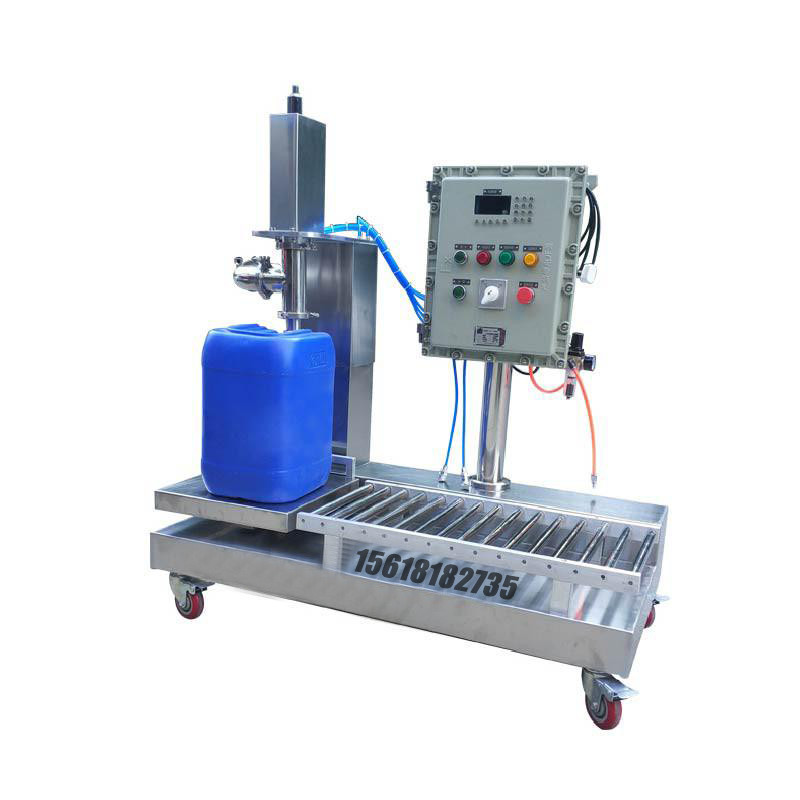
Most standard filling machines face critical limitations when processing liquids with solid particles, mixed textures, or irregular viscosity ranges. Gravity fillers fail to push thick formulas, piston fillers struggle with particle clogging, and vacuum fillers cannot handle heavy emulsions with suspended solids. This original Google E-E-A-T compliant SEO article focuses exclusively on pump filling machines, a versatile positive-displacement filling technology never covered in our previous equipment guides. Engineered with rotary or lobe pump structures, this industrial filler delivers consistent, forced-flow filling for complex liquids that conventional equipment cannot process. This 1000-word guide explores its working principle, core advantages, practical limitations, industrial use cases, and expert selection tips for global multi-formula manufacturing facilities.
Modern food, cosmetic, and chemical production heavily relies on textured liquids containing fruit pulps, herb granules, micro-particles, and blended emulsions. Traditional filling systems lack adaptive feeding power, resulting in particle separation, pipeline blockages, uneven dosing, and damaged raw material textures. Many factories are forced to use multiple specialized fillers for different formulas, raising equipment investment and workshop management costs. Pump filling machines resolve this industry pain point perfectly. Adopting positive displacement pump transmission, they provide stable, adjustable feeding force to carry particle-containing liquids smoothly while maintaining filling precision and material integrity, becoming the most universal filling solution for multi-texture mixed liquid production.
Working Principle of Pump Filling Machines
Pump filling machines adopt professional positive-displacement pump filling technology, with a unique operational logic different from gravity, piston, and flow-meter filling systems. Core components include sanitary rotary lobe pumps, variable-frequency drive motors, anti-clog feeding pipelines, precision flow regulators, and PLC speed control systems. The entire filling process relies on mechanical pump propulsion to achieve quantitative and stable liquid transmission.
During operation, the variable-frequency motor drives the rotary pump to rotate at a calibrated speed, generating continuous positive pressure to suck and push liquid materials. The pump’s sealed rotor chamber stably carries thin liquids, thick emulsions, and particle-containing formulas without crushing or separating solid ingredients. Operators adjust pump rotation speed and running time via the PLC system to control filling volume and speed. The machine supports dual-stage operation: high-speed rotation improves batch efficiency for large-volume filling, while low-speed precise rotation eliminates overflow for small-dose products. Built-in anti-reflux valves prevent liquid backflow after filling, ensuring accurate dosing and clean nozzle conditions for every production cycle.
Core Advantages Over Traditional Fillers
Professional pump positive-displacement filling technology delivers unmatched versatility for complex industrial liquids:
Superior Particle Liquid Adaptability. Gentle rotary pump propulsion smoothly transports liquids with fruit grains, fine particles, and suspended solids without clogging or ingredient damage, a key advantage over piston and gravity fillers.
Full Viscosity Range Compatibility. Adjustable frequency drive adapts seamlessly to thin water-based liquids, medium emulsions, and thick pastes, eliminating the need for multiple dedicated filling devices.
Stable Continuous Feeding. Constant pump pressure ensures uniform liquid output, avoiding flow fluctuation and batch inconsistency caused by liquid level changes and pipeline pressure variation.
Sanitary & Easy Maintenance. Food-grade pump structures feature detachable designs for thorough cleaning and sterilization, complying with GMP hygiene standards for food and cosmetic production.
Flexible Speed & Dose Adjustment. Digital frequency conversion adjustment supports fast SKU switching, adapting to diverse container sizes and production speed requirements flexibly.
Key Industrial Application Scenarios
Pump filling machines serve diversified complex liquid production industries with mixed textures:
Food & Beverage Industry: Pulp-containing fruit juices, granular jams, chunky sauces, and grain-mixed nutritional drinks, preserving particle integrity during filling.
Daily Chemical Industry: Scrub lotions with exfoliating particles, herbal shampoos, and granular cleaning agents, realizing stable filling of textured skincare and cleaning products.
Fine Chemical Industry: Particle-containing coatings, composite industrial additives, and suspended liquid reagents, ensuring uniform mixing and dosing.
Pharmaceutical Industry: Granular medicinal suspensions and herbal residue-containing health liquids, meeting hygienic and consistent filling standards.
Technical Limitations & Selection Guidelines
Pump filling machines have clear application boundaries. They are not suitable for liquids with oversized hard particles that may jam pump rotors. High-speed long-term operation requires regular rotor inspection and lubrication maintenance. This equipment is ideal for factories producing multi-texture, particle-containing, and variable-viscosity liquids, while pure thin liquid mass production can adopt more economical gravity fillers.
Common Industry Misconceptions
Many buyers assume pump filling damages liquid particles. Modern optimized lobe pumps feature gap-adjustable rotors that protect solid ingredients effectively. Others worry pump speed affects precision, but calibrated frequency conversion and timed control ensure commercial-level filling accuracy for all batches.
Conclusion
Pump filling machines fill the market gap in multi-texture complex liquid packaging, solving particle clogging, viscosity limitation, and single-formula restriction of traditional filling equipment. With full viscosity adaptability, unique particle liquid processing capacity, stable continuous feeding, and flexible parameter adjustment, it provides a cost-effective universal packaging solution for diversified manufacturing enterprises. For factories pursuing multi-product flexible production and reduced equipment investment, pump filling machines are the most versatile and reliable automated filling choice.


